Posted: January 26th, 2012 | Author: mberg | Filed under: Uncategorized | No Comments »
So, Warren Buffet says his entire this year is at “between 33 and 41 percent in payroll and income taxes paid to the federal government”.
The top tax bracket is 35%. The social security component of payroll taxes is 4.2% of gross compensation, subject to a limit of $106,800. The medicate component is 1.45%, with no limit.
This means that for most filers the top marginal rate they would ever be… subject to is 36.45%, and only on income over $379,151. Married people filing separately would be slightly higher, hitting a top marginal rate of 38.65% once their earning hit $106,151, but then when they hit $106,800 it drops back down to 34.45% until it hits $189,576 and jumps up to the 36.45% rate.
Note that these are marginal rates. That doesn’t even include the standard deduction or personal exemption, much less anything else.
For his secretary to pay an effective rate anywhere near he claims, she would have to be very highly compensated. Or her husband is, which makes it disingenuous to imply the high tax rate is her own. Consider that a woman filing under the least favourable conditions – married, filing singling – making $386,000 a year (the threshold for being part of the maligned “one percent”) taking nothing but the $5800 standard deduction and $3700 personal exemption would end up paying $109,089 in personal income tax, $4485.60 in social security tax and $5597.00 in Medicare tax, yielding a final effective tax rate of 30.87%.
In fact, you can calculate the minimum income necessary to hit a 35.8% rate pretty easily with a little algebra.
((((X – 5800 – 3700)* 0.35) – 22686.00) + (X * 0.0145) + (108600 * 0.042)) / X = .358
Solve for X (i.e. income) and you get $3,299,969.23. And again, that would assume absolutely *no* tax preferred investments, no retirement fund, no itemized deductions, nothing. So either Buffet got her rate wrong (possibly including state taxes, or conflating marginal rate with effective rate), or his secretary – or maybe her husband – is in the top 0.1% of earners.
Posted: January 18th, 2012 | Author: mberg | Filed under: Uncategorized | 1 Comment »
Public relevance inevitably carries a strict price; one paid in loss of privacy, in scrutiny and criticism. In the case of Rick Santorum, who enjoyed a renewed relevance in the wake of the Iowa caucus results, this has included a number of misguided attacks on the neonatal loss of his Gabriel. These attacks are not particularly original, largely being echoes of criticism on blogs after the formation of his exploratory committee and again after the formal announcement of candidacy.
Much of the commentary gets the basic facts wrong; claiming that Karen Santorum had “an abortion”, or at least that labor was voluntarily induced. Others refer to Gabriel as stillborn or a fetus, despite his (albeit brief) survival outside the womb. Some get the events correct on the face, but insist on dehumanizing the child by referring to him as “it”.
Even those that concede the facts, and allow that events as they occurred did not violate his professed beliefs or political stances, nonetheless conclude he is a hypocrite because they would have induced labor if necessary to preserve Karen’s life. This betrays the ignorance of the accusers, not merely of a candidate but of Catholic teaching in general. The Santorums went well beyond the demands of their faith.
The key concept is called the doctrine (or sometimes principle) of double effect, which allows that some actions have a positive and negative effect. There are generally four criteria that need to be satisfied for such an act to be considered moral. First, the act in and of itself must not be intrinsically evil. Second, the positive effect must be the intention. Third, the positive effect must not be consequence of the negative effect. Fourth, there must be grave reason for permitting the negative effect.
For example, let’s say you are in a group of people fleeing zombies. Even if tripping a companion would preserve the lives of yourself and your other companions, it would not be moral under this test, as the positive outcome would be achieved through an act of deliberate, intentional evil.
Alternately, let’s say your band of survivalists makes their escape down an alley with a chain link fence, but one member of the group is a particularly slow runner. Even though locking the gate would consign the fate of the lagging member, it would be moral under this test, as his death would incidental rather than intentional. Though the ultimate consequence of sacrificing one for the survival of the many is the same, the nature and intent of the immediate action is fundamentally different.
Using this standard as guide, it is clear that induced labor would have been well justified. No one disputes that Karen was in grave and immediate danger, and no act of intrinsic evil or directly evil intent would have been performed. There is simply no evidence that the actions or intentions of the Santorums were anything but aligned with their faith.
Posted: November 10th, 2011 | Author: mberg | Filed under: Uncategorized | No Comments »
You don’t to have it both ways. You don’t get to declare yourselves a leaderless inclusive horizontal movement, and then disavow any responsibility for the actions of the people who join you.
As long as your positions and your demands remain nebulous, you own every ridiculous and extreme thing said in your camps and at your rallies.
As long as your occupations persist in defiance of law and without due consideration for the surrounding population, you deserve every bit of derision directed toward you.
As long as your members are openly hostile to law enforcement, rather than seeking their cooperation, you are responsible for every act of violence or vandalism carried out in your name.
Posted: October 17th, 2011 | Author: mberg | Filed under: Uncategorized | No Comments »
Since people seem confused, this is what democracy looks like:

An Iraqi woman flashes victory after voting.
Not this:

An Occupy Los Angeles protestor.
This:
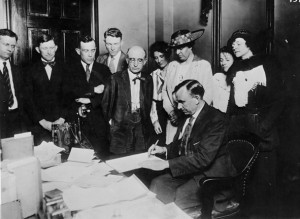
Ceremony ratifying the 19th Amendment in Tennessee
Not this:

Trash in Zuccotti Park.
This:
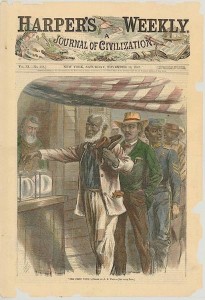
"The First Vote"
Not this:

New York protestor defectates on a police car.
Posted: January 19th, 2010 | Author: mberg | Filed under: Uncategorized | No Comments »
Wow.
Posted: October 10th, 2009 | Author: mberg | Filed under: Uncategorized | No Comments »
When considering whether it might be premature to honour someone for their intentions and their popularity, one should think back to 2002. The President had domestic approval rating in excess of eighty percent. Global favorability ratings were comparable to, and in some cases far higher than current levels. We had recently spearheaded a successful and multilateral effort to displace a oppressive theocratic regime. Humanitarian aid flourished, ambitious initiatives to combat diseases were announced, and the President called on Americans to make a serious dedication to public service.
Should Bush have been awarded for his intentions and popularity too?
Posted: September 16th, 2009 | Author: mberg | Filed under: National | Tags: health care | 1 Comment »
H.R. 77: Health Care Incentive Act
Sponsor: Darrell E. Issa (CA-49)
Introduced: 2009-01-06
To provide for a credit for certain health care benefits in determining the minimum wage.
H.R. 109: America’s Affordable Health Care Act of 2009
Sponsor: Jeff Fortenberry (NE-1)
Introduced: 2009-01-06
To provide for the offering of Health Benefit Plans to individuals, to increase funding for State high risk health insurance pools, and to promote best practice protocols for State high risk pools.
H.R. 164: Seniors’ Health Care Freedom Act of 2009
Sponsor: Ron Paul (TX-14)
Introduced: 2009-01-06
To provide greater health care freedom for seniors.
H.R. 198: Health Care Tax Deduction Act of 2009
Sponsor: Cliff Stearns (FL-6)
Introduced: 2009-01-06
To amend the Internal Revenue Code of 1986 to allow a deduction for amounts paid for health insurance and prescription drug costs of individuals.
H.R. 270: TRICARE Continuity of Coverage for National Guard and Reserve Families Act of 2009
Sponsor: Robert E. Latta (OH-5)
Introduced: 2009-01-07
To amend title 10, United States Code, to provide for continuity of TRICARE Standard coverage for certain members of the Retired Reserve.
H.R. 321: SCHIP Plus Act of 2009
Sponsor: Jeff Fortenberry (NE-1)
Introduced: 2009-01-08
To amend title XXI of the Social Security Act to expand coverage options under the State Children’s Health Insurance Program (SCHIP) through premium assistance.
H.R. 464: More Children, More Choices Act of 2009
Sponsor: Tom Price (GA-6)
Introduced: 2009-01-13
To provide for a 5-year SCHIP reauthorization for coverage of low-income children, an expansion of child health care insurance coverage through tax fairness, and a health care Federalism initiative, and for other purposes.
H.R. 502: Health Care Freedom of Choice Act
Sponsor: Michele Bachmann (MN-6)
Introduced: 2009-01-14
To amend the Internal Revenue Code of 1986 to improve health care choice by providing for the tax deductibility of medical expenses by individuals.
H.R. 544: Flexible Health Savings Act of 2009
Sponsor: Edward R. Royce (CA-40)
Introduced: 2009-01-14
To amend the Internal Revenue Code of 1986 to allow amounts in a health flexible spending arrangement that are unused during a plan year to be carried over to subsequent plan years or deposited into certain health or retirement plans.
H.R. 917: [NO TITLE]
Sponsor: Brett Guthrie (KY-2)
Introduced: 2009-02-09
To increase the health benefits of dependents of members of the Armed Forces who die because of a combat-related injury.
H.R. 1086: Help Efficient, Accessible, Low-cost, Timely Healthcare (HEALTH) Act of 2009
Sponsor: Phil Gingrey (GA-11)
Introduced: 2009-02-13
To improve patient access to health care services and provide improved medical care by reducing the excessive burden the liability system places on the health care delivery system.
H.R. 1118: Health Care Choices for Seniors Act
Sponsor: Marsha Blackburn (TN-7)
Introduced: 2009-02-23
To amend the Social Security Act to improve choices available to Medicare eligible seniors by permitting them to elect (instead of regular Medicare benefits) to receive a voucher for a health savings account, for premiums for a high deductible health insurance plan, or both and by suspending Medicare late enrollment penalties between ages 65 and 70.
H.R. 1441: Ryan Dant Health Care Opportunity Act of 2009
Sponsor: Kenny Marchant (TX-24)
Introduced: 2009-03-11
To amend title XIX of the Social Security Act to allow States to permit certain Medicaid eligible individuals who have extremely high annual lifelong orphan drug costs to continue on Medicaid notwithstanding increased income.
H.R. 1458: Comprehensive Immunosuppressive Drug Coverage for Kidney Transplant Patients Act of 2009
Sponsor: Dave Camp (MI-4)
Introduced: 2009-03-12
To amend title XVIII of the Social Security Act to provide continued entitlement to coverage for immunosuppressive drugs furnished to beneficiaries under the Medicare Program that have received a kidney transplant and whose entitlement to coverage would otherwise expire, and for other purposes.
H.R. 1468: Medical Justice Act of 2009
Sponsor: Michael C. Burgess (TX-26)
Introduced: 2009-03-12
To provide health care liability reform, and for other purposes.
H.R. 1658: Veterans Healthcare Commitment Act of 2009
Sponsor: Todd Tiahrt (KS-4)
Introduced: 2009-03-19
To amend title 38, United States Code, to prohibit the recovery by the United States of charges from a third party for hospital care or medical services furnished to a veteran for a service-connected disability.
H.R. 1891: Sunset of Life Protection Act of 2009
Sponsor: Rodney Alexander (LA-5)
Introduced: 2009-04-02
To amend the Internal Revenue Code of 1986 to allow an above-the-line deduction for half of an individual’s long-term care insurance premiums.
H.R. 2520: Patients’ Choice Act
Sponsor: Paul Ryan (WI-1)
Introduced: 2009-05-20
To provide comprehensive solutions for the health care system of the United States, and for other purposes.
S. 1099: Patients’ Choice Act
Sponsor: Tom Coburn (OK)
Introduced: 2009-05-20
A bill to provide comprehensive solutions for the health care system of the United States, and for other purposes.
H.R. 2607: Small Business Health Fairness Act of 2009
Sponsor: Sam Johnson (TX-3)
Introduced: 2009-05-21
To amend title I of the Employee Retirement Income Security Act of 1974 to improve access and choice for entrepreneurs with small businesses with respect to medical care for their employees.
H.R. 2692: CAH Designation Waiver Authority Act of 2009
Sponsor: Mac Thornberry (TX-13)
Introduced: 2009-06-03
To amend title XVIII of the Social Security Act to restore State authority to waive the 35-mile rule for designating critical access hospitals under the Medicare Program.
H.R. 2784: Partnership to Improve Seniors Access to Medicare Act
Sponsor: Mac Thornberry (TX-13)
Introduced: 2009-06-10
To establish a loan repayment program for qualifying physicians and nurse practitioners participating in the Medicare Program.
H.R. 2785: Health Care Paperwork Reduction and Fraud Prevention Act of 2009
Sponsor: Mac Thornberry (TX-13)
Introduced: 2009-06-10
To reduce the amount of paperwork and improve payment policies for health care services, to prevent fraud and abuse through health care provider education, and for other purposes.
H.R. 2786: Patient Fairness and Indigent Care Promotion Act of 2009
Sponsor: Mac Thornberry (TX-13)
Introduced: 2009-06-10
To amend the Internal Revenue Code of 1986 to improve the ability of medical professionals to practice medicine and provide quality care to patients by providing a tax deduction for patient bad debt.
H.R. 2787: Medical Liability Procedural Reform Act of 2009
Sponsor: Mac Thornberry (TX-13)
Introduced: 2009-06-10
To provide grants to States for health care tribunals, and for other purposes.
S. 1324: Health Care Freedom Act of 2009
Sponsor: Jim DeMint (SC)
Introduced: 2009-06-23
A bill to ensure that every American has a health insurance plan that they can afford, own, and keep.
H.R. 3141: Strengthening the Health Care Safety Net Act of 2009
Sponsor: John Sullivan (OK-1)
Introduced: 2009-07-09
To amend title XIX of the Social Security Act to provide for a DSH redistribution pool from unexpended Medicaid DSH allotments in order to increase Medicaid DSH allotments for low DSH States and to provide grants for health access networks serving the uninsured.
H.R. 3217: Health Care Choice Act of 2009
Sponsor: John B. Shadegg (AZ-3)
Introduced: 2009-07-14
To amend the Public Health Service Act to provide for cooperative governing of individual health insurance coverage offered in interstate commerce.
H.R. 3218: Improving Health Care for All Americans Act
Sponsor: John B. Shadegg (AZ-3)
Introduced: 2009-07-14
To provide a refundable tax credit for medical costs, to expand access to health insurance coverage through individual membership associations (IMAs), and to assist in the establishment of high risk pools.
S. 1459: Health Care Choice Act of 2009
Sponsor: Jim DeMint (SC)
Introduced: 2009-07-16
A bill to amend the Public Health Service Act to provide for cooperative governing of individual health insurance coverage offered in interstate commerce.
H.R. 3356: Medicare Beneficiary Freedom to Choose Act of 2009
Sponsor: Sam Johnson (TX-3)
Introduced: 2009-07-28
To amend title XVIII of the Social Security Act to clarify the use of private contracts by Medicare beneficiaries for professional services and to allow individuals to choose to opt out of the Medicare part A benefits.
H.R. 3372: Health Care OverUse Reform Today Act (HealthCOURT Act)
Sponsor: Tom Price (GA-6)
Introduced: 2009-07-29
To establish Medicare performance-based quality measures, to establish an affirmative defense in medical malpractice actions based on compliance with best practices guidelines, and to provide grants to States for administrative health care tribunals.
H.R. 3400: Empowering Patients First Act
Sponsor: Tom Price (GA-6)
Introduced: 2009-07-30
To provide for incentives to encourage health insurance coverage, and for other purposes.
H.R. 3438: Access to Insurance for all Americans Act
Sponsor: Darrell E. Issa (CA-49)
Introduced: 2009-07-31
To amend title 5, United States Code, to establish a national health program administered by the Office of Personnel Management to offer Federal employee health benefits plans to individuals who are not Federal employees, and for other purposes.
H.R. 3454: Medicare Hospice Reform and Savings Act of 2009
Sponsor: John Sullivan (OK-1)
Introduced: 2009-07-31
To amend title XVIII of the Social Security Act to reform payments and coverage for hospice care under the Medicare Program.
H.R. 3478: Patient-Controlled Healthcare Protection Act of 2009
Sponsor: Louie Gohmert (TX-1)
Introduced: 2009-07-31
To amend the Internal Revenue Code of 1986 to modify rules relating to health savings accounts, to provide payments for a health savings account and for a high deductible health plan instead of entitlement to benefits under Medicare, Medicaid, and SCHIP, to give more control and coverage to patients, to lower health care costs through increased price transparency, and to require immigrants to have a health savings account and high deductible health coverage at time of admission.
Posted: August 12th, 2009 | Author: mberg | Filed under: Uncategorized | No Comments »
I wonder how many people citing this memo from the Right Principles PAC as evidence of Republican thuggery have read this memo from Health Care for America Now. Let’s compare:
Read the rest of this entry »
Posted: August 4th, 2009 | Author: mberg | Filed under: Uncategorized | 2 Comments »
I never thought I would see the day where left wing sites would cite difficulty organizing people to counter conservative protesters. Let’s face it, the right has always had an activist gap. Not only do we skew older, which tends to mute passions, but as a group we tend to regard politics as an unpleasant distraction rather than a means to an end.
Perhaps more interesting than the late rise of conservative activism is the liberal reaction. This particular piece at FireDogLake goes as far as characterizing Republican participation in health care “town hall” meetings as “one step short of angry brown shirt mobs physically threatening and beating people”.
Watching the videos I see some people being rambunctious, perhaps even obnoxious, but “sheer thuggery”? At worst the videos circulating show a lack of decorum. I think our legislators can weather a few boisterous and resolved constituents.
Now it seems the White House has gone on record with the accusation that conservative groups are “manufacturing” anger, with vague allusions to nefarious forces behind the scenes.
I suppose honest answers to legitimate concerns is too much to ask for.
Posted: August 2nd, 2009 | Author: mberg | Filed under: Personal | No Comments »
When I started this blog I didn’t promote it beyond mentioning it to friends. I was writing to write rather than writing to be read, if that makes sense. The server logs indicate that I’m building a readership in spite of myself, though, so introductions are probably in order.
So, hi. My name is Matthew Berg, and I find talking about myself – particularly to strangers – exceedingly awkward. I am a life long resident of western New York and a long time resident of the University Heights district of Buffalo. I earn my keep as a computer professional at a local internet firm recently named one of the fastest growing companies in the region.
First and foremost in my life is my family. My wife and I have been blessed with three sons and are expecting a fourth child in January. The natural insanity of small children constitutes my primary source of entertainment.
Other than that I’m a fairly boring guy. When not working or spending time with my family my usual diversions are reading and playing armchair politician, and pretty soon I’ll be pursuing a degree in history and political science.
Any questions?